0

Your Cart

No products in the cart.
Sumaj Yapay

Move Over, Soy... Tarwi Wants a Word

Soy has been the heavyweight champ of plant protein for years.

Tofu. Tempeh. Edamame. Soy milk. Protein powder. You’ll find soy in just about every aisle of the grocery store, and it’s earned its spot. It’s one of the most protein-packed legumes out there.

Unit now. Meet Tarwi.

Also called Andean lupin or chocho, tarwi (Lupinus mutabilis) has been grown and enjoyed in Peru, Ecuador, and Bolivia for generations. Outside South America, though, it’s still flying under the radar. (Learn more about tarwi here.)

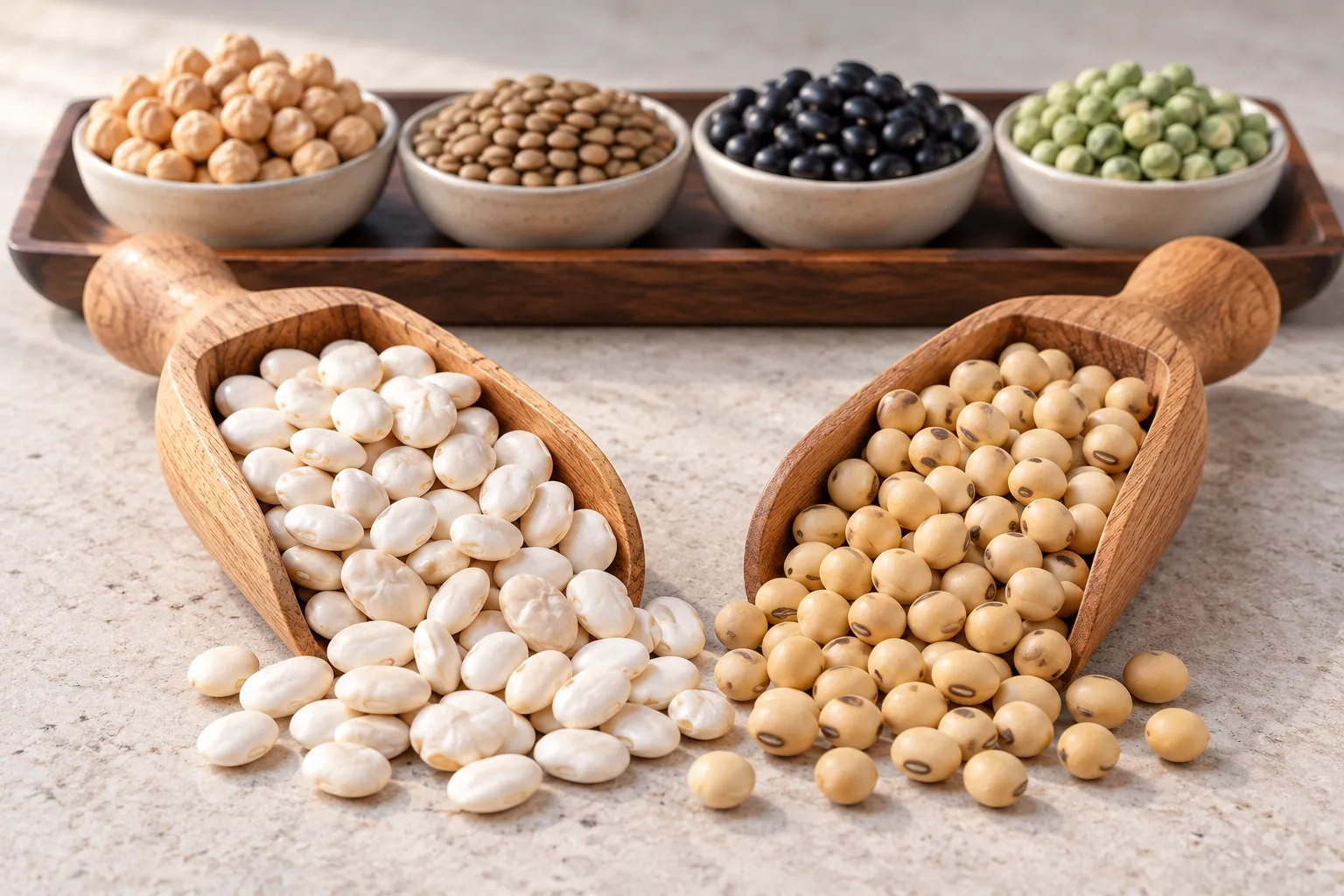
Line the two up nutrition-wise, and things get interesting.

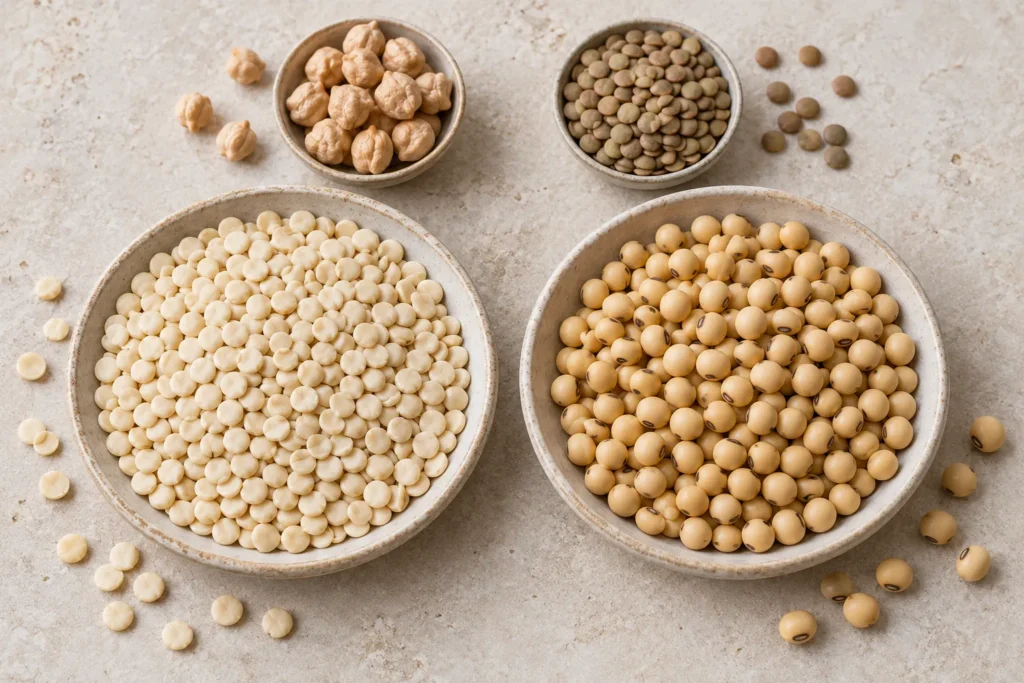
When we compared tarwi to chickpeas, tarwi left them in the dust on protein. Soy? Soy can actually keep up. This one’s a much closer match.

Tarwi vs. Soy at a Glance

Let’s start with prepared beans rather than mixing dry and cooked numbers.

Per 100 g, cooked Tarwi Soybeans/Edamame
Protein ~14–18 g ~17–18 g
Starch Very low Low
Fat Naturally high Naturally high
Texture Firm, almost crunchy Softer, tender
Traditional roots Andes East Asia
Common forms Whole beans, snacks, powder Edamame, tofu, tempeh, milk, flour

When It Comes to Protein, Tarwi and Soy Play in the Same League

Here’s where it gets good. Prepared tarwi delivers roughly 14–18 grams of protein per 100 grams, and cooked soybeans clock in at about 17–18 grams. (Learn more about tarwi here.)

Pretty close, right?

A Protein Match-Up Worth Watching

We don’t need to crown tarwi the protein king here.

Soy has earned its reputation.

But tarwi holds its own.

Let’s talk dry beans. Tarwi averages around 42% protein, and some varieties top 50%. That’s soy-level territory, and miles ahead of pantry regulars like chickpeas and lentils. (Learn more about tarwi here.)

Add water and the numbers shrink (cooking does that), but the plot doesn’t change: tarwi and soy are still neck and neck.

For a bean that’s still a stranger to most American grocery aisles, that’s one heck of an introduction.

A Protein Match-Up Worth Watching

Are Tarwi and Soy Complete Proteins?

Here’s where things get a little more nuanced.

Good news: tarwi has all nine essential amino acids, so it officially earns the “complete protein” badge. But having the full lineup doesn’t mean every player gets equal time on the field. Some amino acids show up in bigger amounts than others.

Like many legumes, tarwi is relatively limited in the sulfur-containing amino acids methionine and cysteine. Soy generally has a stronger overall essential amino acid profile. tarwi (main article)

So we’re not going to tell you tarwi secretly beats soy at everything.

It doesn’t need to.

No need to stretch the truth here. Tarwi’s resume is impressive enough.

Even better, Andean diets have long teamed tarwi up with maize and quinoa, a combo that rounds out its amino acid profile beautifully. (Learn more about tarwi here.)

Call it ancient meal prep. They were nailing protein pairing centuries before nutrition labels showed up.

Neither Bean Is Particularly Interested in Starch

Neither Bean Is Particularly Interested in Starch

This is one place where tarwi and soy have something unusual in common.

Think about chickpeas, lentils, black beans, or peas, and you’re looking at legumes that contain a meaningful amount of starch.

Tarwi and soy are different.

Tarwi’s dry seed is made up largely of protein, fat, and fiber, with very little starch. Soy has a similarly unusual macronutrient profile compared with many other legumes. tarwi (main article)

That’s one reason the two end up looking much more alike nutritionally than you might expect from crops that developed on opposite sides of the world.

Neither Bean Is Particularly Interested in Starch

Tarwi Isn't a Low-Fat Bean Either

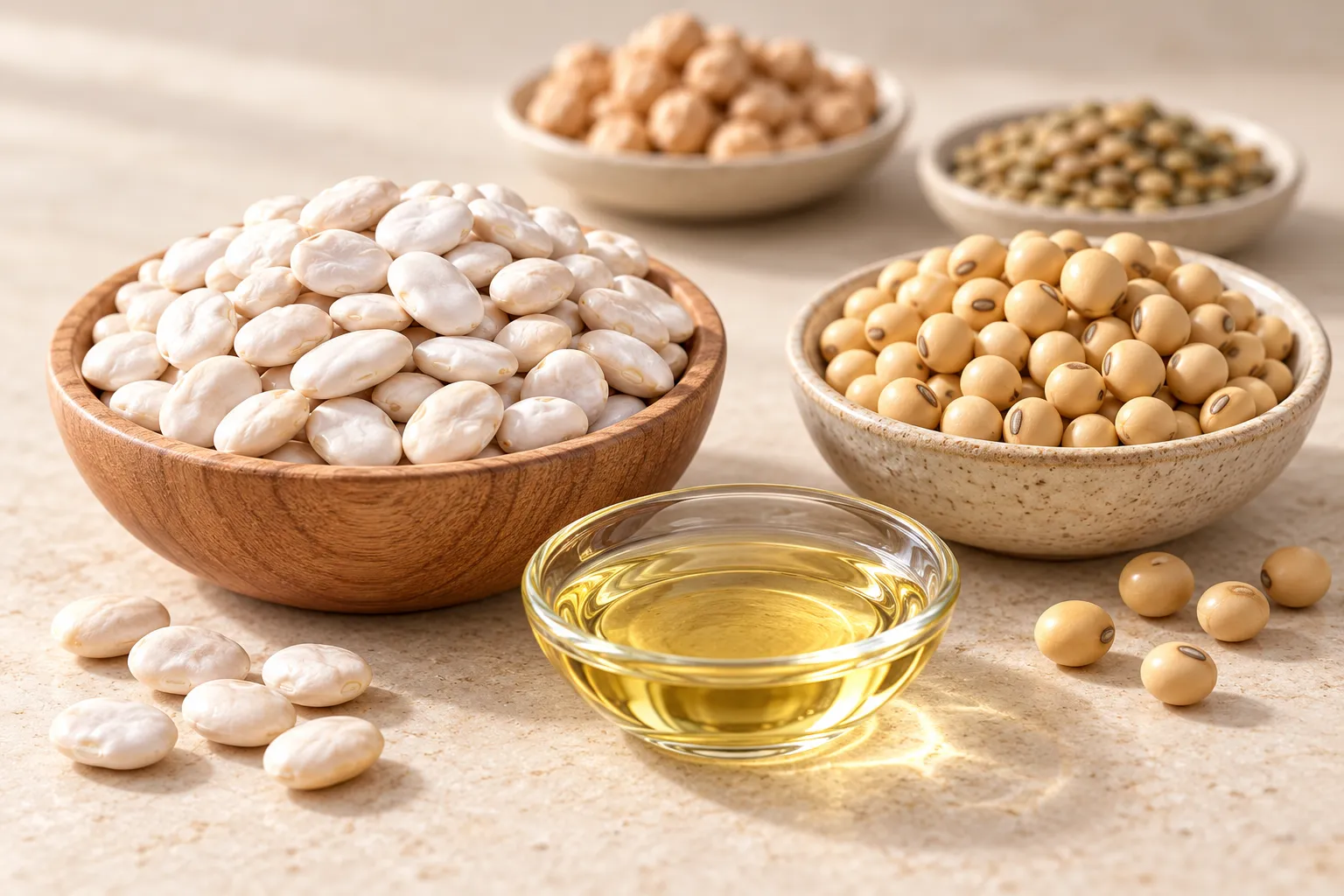
Tarwi contains roughly 14–24% fat by dry weight, depending on the variety. Much of that is unsaturated fat, including oleic and linoleic acids. tarwi (main article)

Soy is also naturally higher in fat than legumes like chickpeas and lentils.

Again, these two keep finding things to talk about.

For tarwi, that fat adds a richer mouthfeel and helps explain why the bean behaves differently from starchier legumes when you turn it into dips or flour.

Tarwi Isn't a Low-Fat Bean Either

The Bigger Difference Might Actually Be the Starch

But They Definitely Don't Eat the Same

But They Definitely Don't Eat the Same

Nutrition is where tarwi and soy get surprisingly close.

The eating experience is where they start heading in different directions.

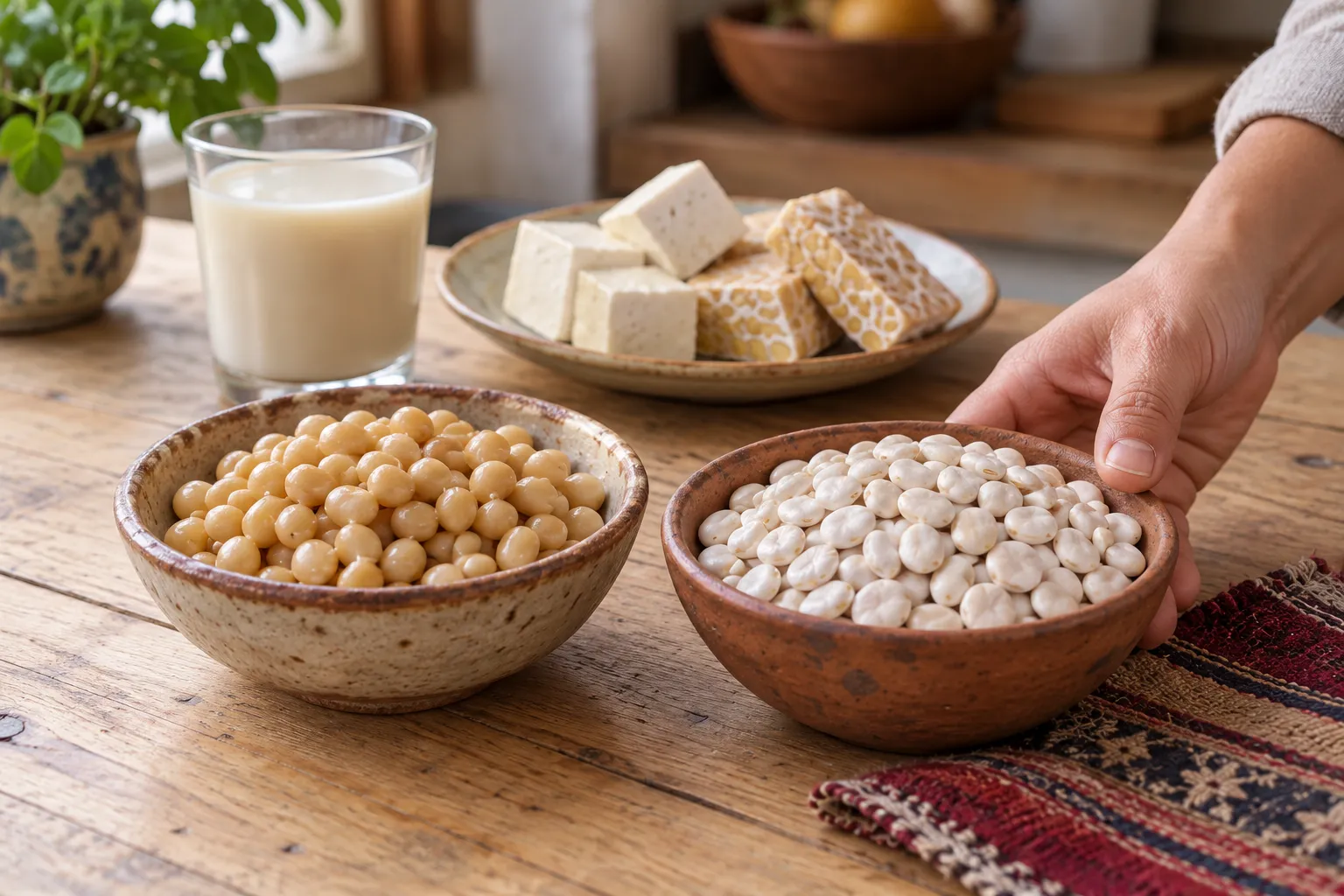
If you’ve eaten edamame, you know the texture: tender, slightly creamy, with a little bite.

Prepared tarwi is firmer. Almost crunchy. Its flavor is mild, slightly nutty, and faintly savory, and the bean holds its shape particularly well. tarwi (main article)

Then there are the ways we’ve learned to use them.

Soy is the shapeshifter.

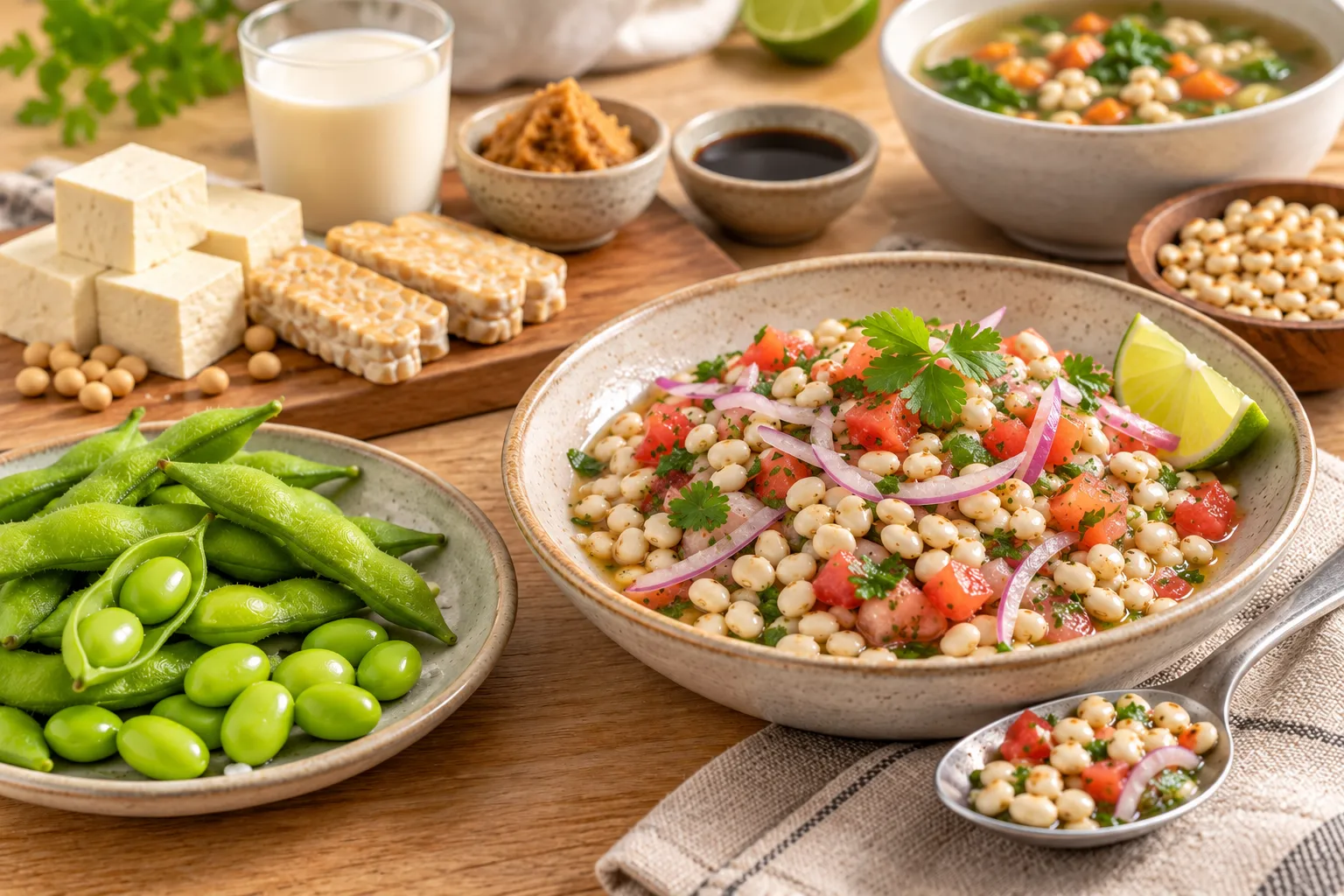
It becomes tofu, tempeh, soy milk, miso, soy sauce, edamame, flour, oil, protein isolate… the list gets long quickly.

Tarwi has its own traditions. In Ecuador, ceviche de chocho pairs the prepared beans with ingredients like red onion, tomato, lime, and cilantro. Across the Andes, people also eat tarwi in soups, stews, and toasted preparations. tarwi (main article)

We’re now taking it in another direction, too.

But They Definitely Don't Eat the Same

We Like Our Tarwi Crunchy

One challenge with introducing tarwi is that most people don’t have a family tarwi recipe on hand.

So, we made the introduction a little easier.

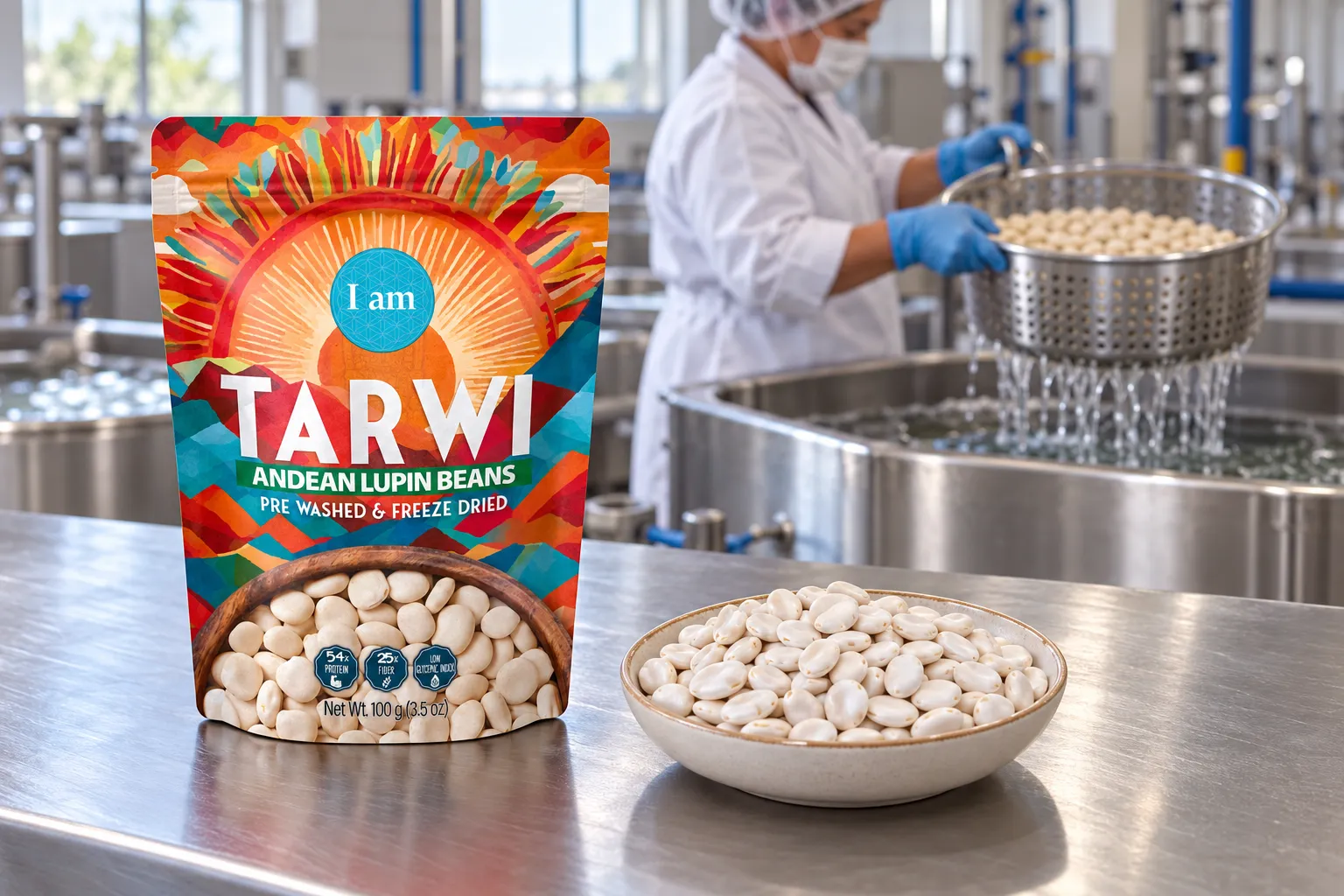
We prepare our whole tarwi beans and freeze-dry them into a light, crunchy snack that’s ready to eat straight from the bag. No recipe required. No wondering what to do with an unfamiliar bean sitting on your kitchen counter.

We also make tarwi powder, which gives the bean a completely different job. You can add it to smoothies, baking, and other recipes when you want the protein without the whole bean.

Soy has had a few decades to work its way into just about every format imaginable.

Give us a minute. We’re working on it.

We Like Our Tarwi Crunchy
Tarwi Does Have One Extra Step Before It's Ready to Eat

Tarwi Does Have One Extra Step Before It's Ready to Eat

Raw tarwi requires something soy doesn’t: debittering.

The raw bean naturally contains bitter compounds called quinolizidine alkaloids. Before tarwi is eaten, those compounds need to be removed through proper processing. tarwi (main article)

This isn’t something we leave for you to figure out at home.

The tarwi used in our snacks and powder is prepared and debittered before it reaches you. Our freeze-dried beans are ready to eat straight from the package.

If you’ve come across raw tarwi somewhere else, though, don’t treat it like an ordinary dried bean. Our guide to tarwi safety and alkaloids explains why that processing step matters.

Tarwi Does Have One Extra Step Before It's Ready to Eat

Soy Has Something Tarwi Doesn't: Name Recognition

Ask someone to name a plant protein and there’s a good chance soy comes up quickly.

Tarwi?

You might get a blank stare.

Soy has an enormous global supply chain and decades of familiarity behind it. You can buy edamame in the freezer aisle, tofu next to the produce, soy milk at a coffee shop, and soy protein in foods where you didn’t even realize you were eating soy.

Tarwi is still introducing itself outside the Andes.

But unfamiliar doesn’t mean new.

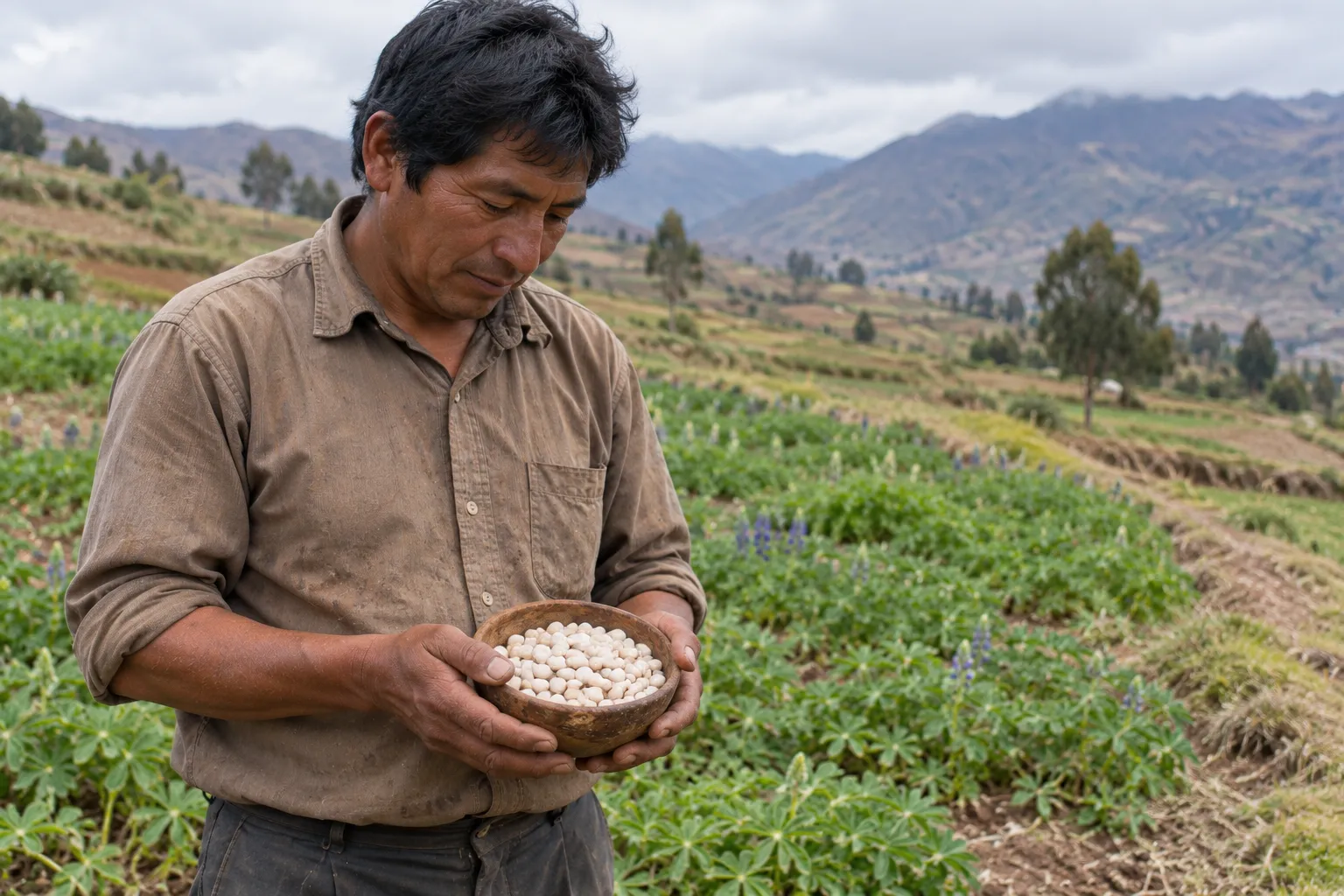
People in the Andes have been cultivating tarwi for well over a thousand years. What’s new is that the rest of us are finally starting to pay attention. tarwi (main article)

Soy got the global spotlight first.

Tarwi has been busy doing its thing in the mountains.

Soy Has Something Tarwi Doesn't Name Recognition

Tarwi vs. Soy: The Bottom Line

This one isn’t a takedown.

If anything, putting tarwi next to soy shows just how unusual tarwi actually is.

Both stand apart from many familiar legumes because they’re high in protein and fat while remaining low in starch. Cooked soy comes in slightly higher at around 17–18 grams of protein per 100 grams, while prepared tarwi typically provides around 14–18 grams. tarwi (main article)

Soy also has the advantage of familiarity and an enormous variety of foods made from it.

Tarwi brings something different: a firm texture, its own Andean food tradition, and a nutritional profile that puts a relatively unknown bean in the same conversation as one of the world’s best-known plant proteins.

We’re not asking soy to move out.

We’re just making a little room on the shelf.

Want to know how tarwi ended up with that unusual nutritional profile, where it grows, and why you’ve probably never heard of it? Start with our complete guide to tarwi.

Tarwi vs. Soy The Bottom Line
×

Thank you for your interest in Tarwi!

We’ve received your information, and a member of our team will be in touch to learn more about your
needs and discuss how Tarwi could work for your business.