Move Over, Chickpea: There's a New Bean in Town
(and It's Called Tarwi)
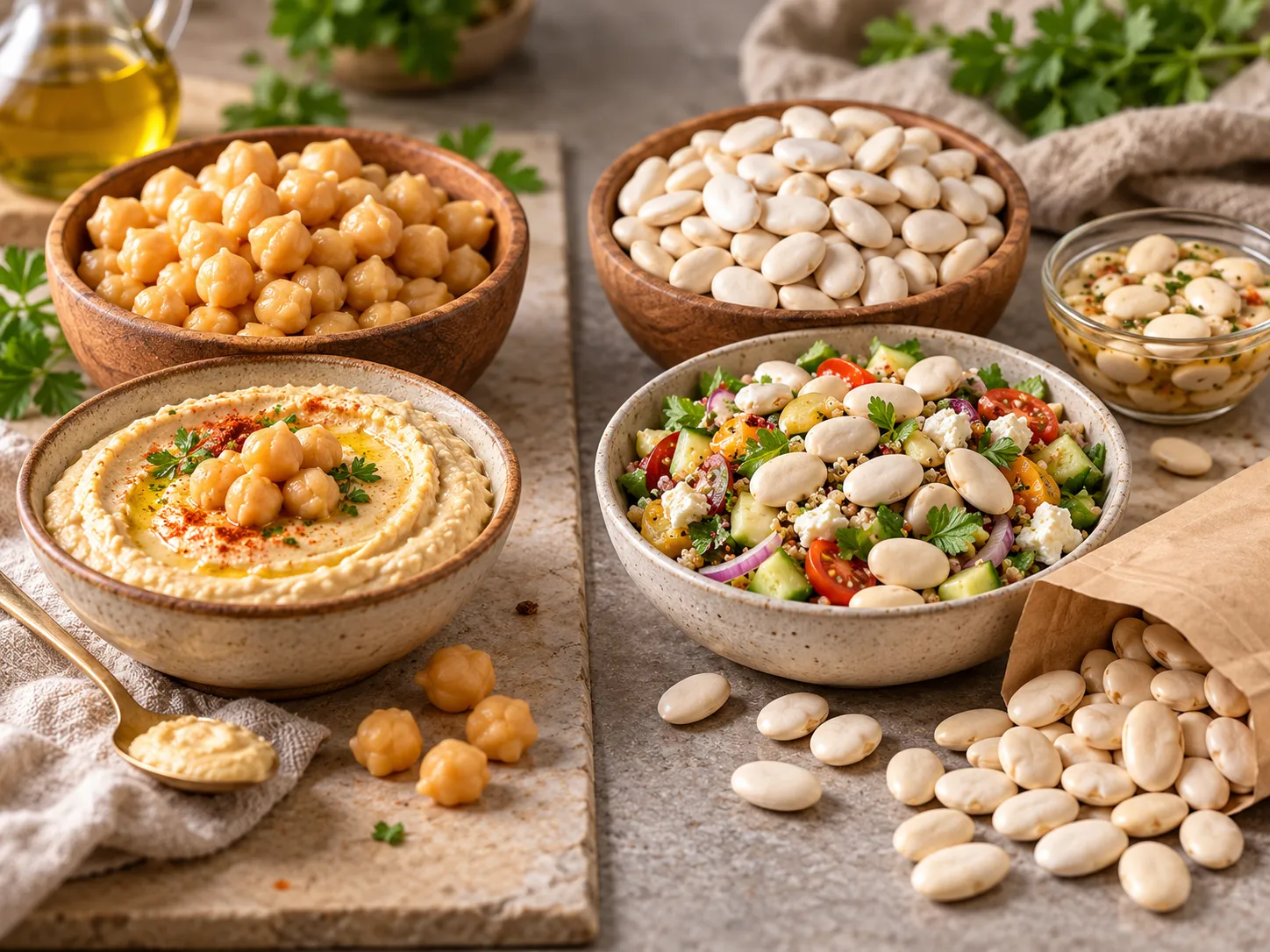
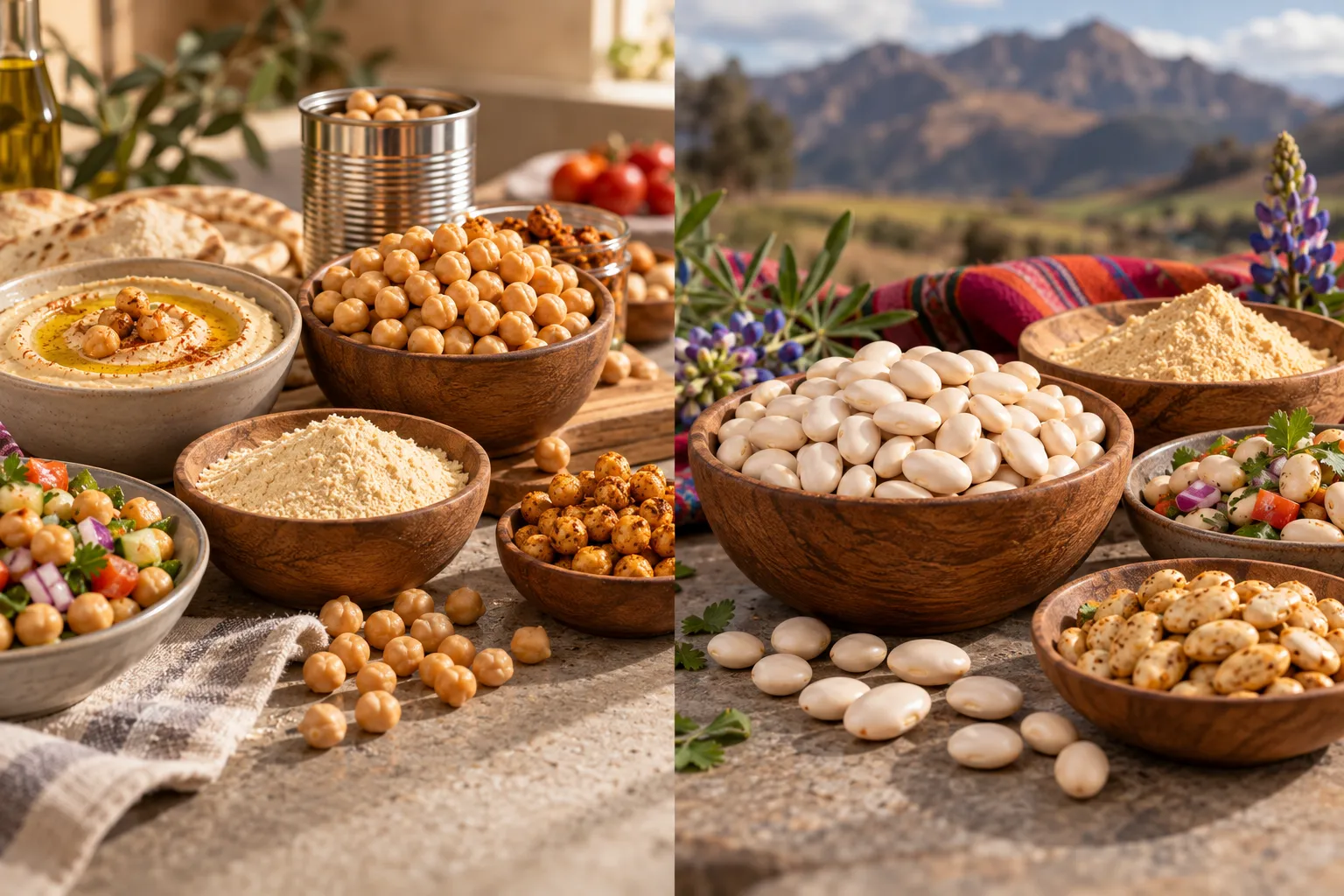
Chickpeas need almost no introduction. They’re in hummus, salads, grain bowls, curries, and probably at least one forgotten can in the back of your pantry. Tarwi is less familiar. Also known as Andean lupin or chocho, tarwi (Lupinus mutabilis) is a legume native to the Andes that has been eaten in Peru, Ecuador, and Bolivia for generations. And while putting tarwi next to a chickpea makes for a fairly normal-looking bowl of beans, their nutritional profiles tell a different story.
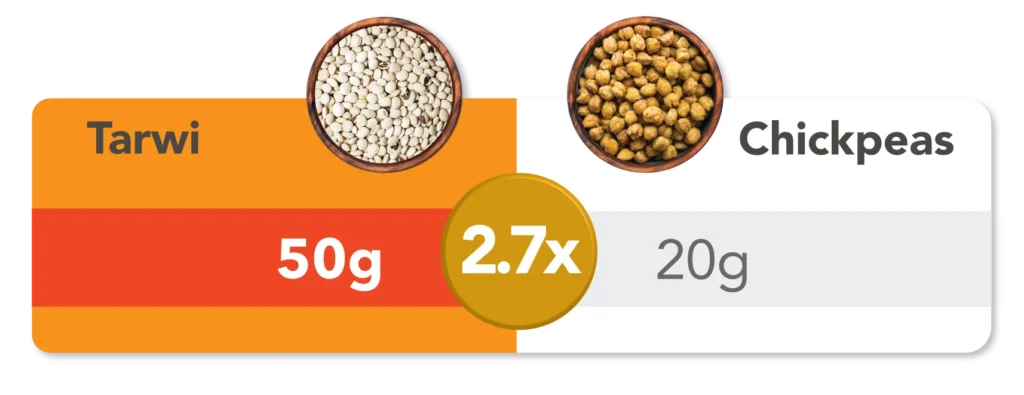
The biggest difference? Tarwi packs considerably more protein with very little starch.
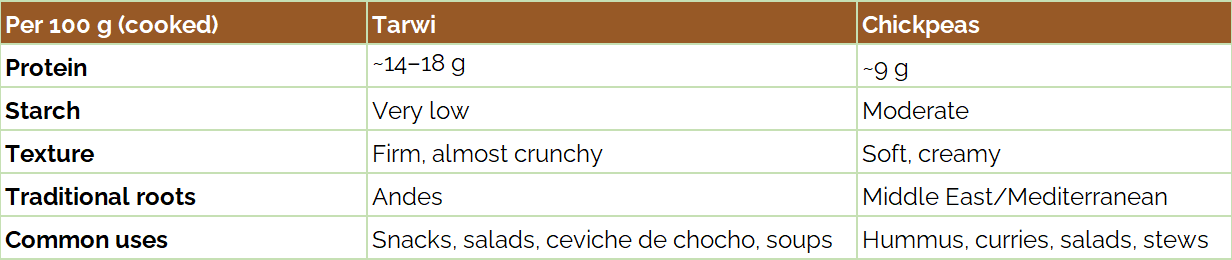
Tarwi vs. Chickpeas at a Glance
Comparing legumes gets tricky because numbers change depending on whether you’re looking at dry or cooked beans. So rather than comparing dry tarwi with cooked chickpeas and giving tarwi an unfair advantage, let’s compare them in their prepared form.
Prepared tarwi lands around 14–18 grams of protein per 100 grams, while cooked chickpeas land around 9 grams.
Tarwi Has More Protein Than Chickpeas
This is probably the biggest reason someone comparing the two would stop and look twice.
If protein is what you’re after, tarwi is hard to beat. Nearly half of every dried bean is protein, and some varieties top 50%. Chickpeas, as good as they are, can’t compete on that front.
Tarwi Has More Protein Than Chickpeas
This is probably the biggest reason someone comparing the two would stop and look twice.
If protein is what you’re after, tarwi is hard to beat. Nearly half of every dried bean is protein, and some varieties top 50%. Chickpeas, as good as they are, can’t compete on that front.
The Bigger Difference Might Actually Be the Starch
Most familiar legumes store a substantial amount of their energy as starch.
Tarwi doesn’t.
Its dry seed is made up largely of protein, fat, and fiber, with very little starch. That composition is unusual among commonly eaten legumes and is one reason its nutrition looks so different next to chickpeas, lentils, or black beans.
Chickpeas contain a moderate amount of starch. Tarwi contains very little.
The Bigger Difference Might Actually Be the Starch
That means the real story isn’t simply: Tarwi = more protein. It’s that tarwi delivers that protein with a very different balance of macronutrients. For someone accustomed to getting plant protein from chickpeas, that’s probably the most interesting thing about the comparison.
Tarwi Also Contains More Fat
Here’s one difference that can get lost when all the attention goes to protein.
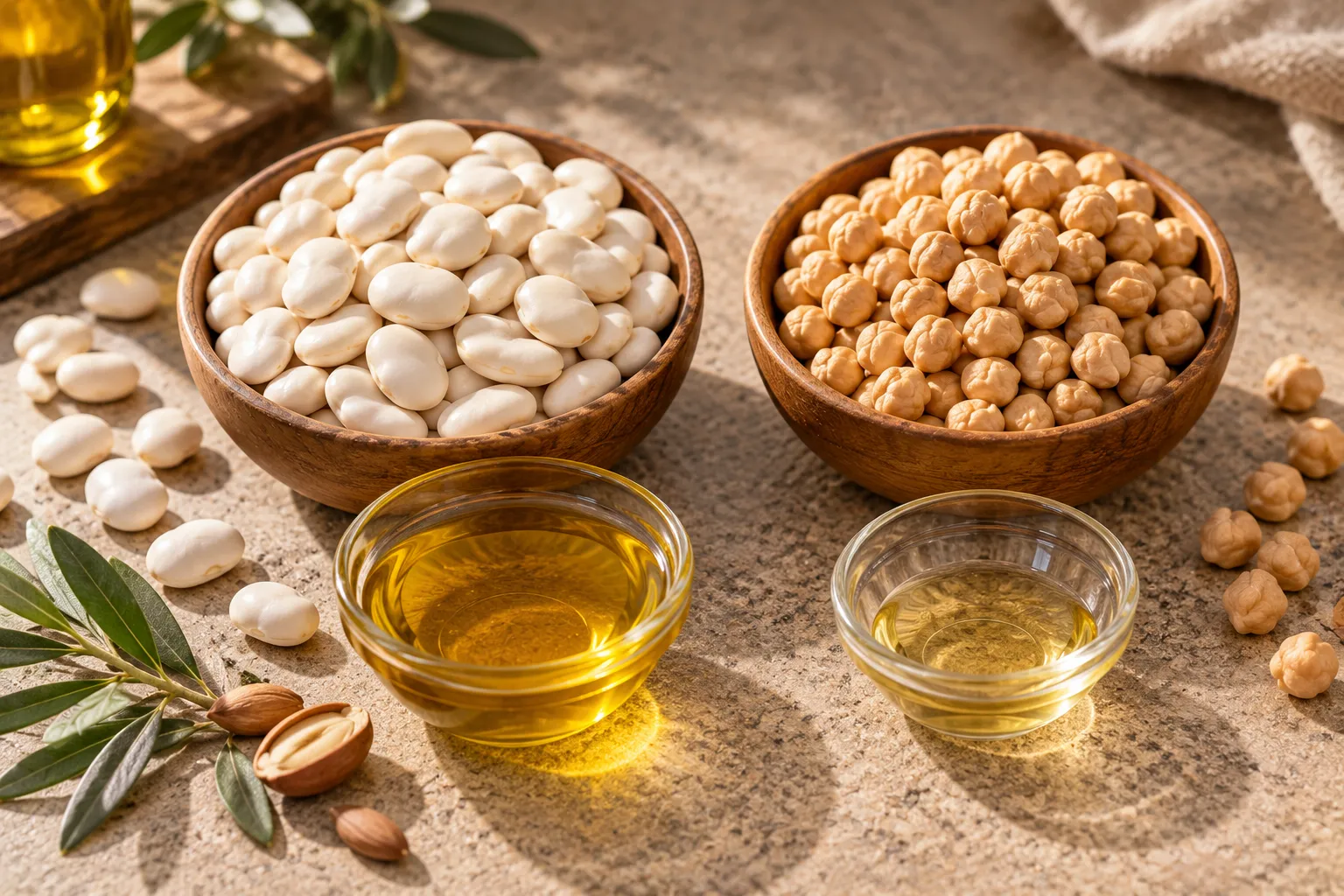
Tarwi is naturally higher in fat than chickpeas.
Dry, debittered tarwi typically contains around 14–24% fat, with much of it coming from unsaturated fats, including oleic and linoleic acids.
That isn’t inherently a pro or a con. It simply makes tarwi a different kind of legume.
It also helps explain why tarwi can have a slightly richer mouthfeel than you might expect from a bean.
Tarwi Also Contains More Fat
Here’s one difference that can get lost when all the attention goes to protein.
Tarwi is naturally higher in fat than chickpeas.
Dry, debittered tarwi typically contains around 14–24% fat, with much of it coming from unsaturated fats, including oleic and linoleic acids.
That isn’t inherently a pro or a con. It simply makes tarwi a different kind of legume.
It also helps explain why tarwi can have a slightly richer mouthfeel than you might expect from a bean.
What About Fiber?
Both bring fiber to the table, although their overall composition is different.
Dry, debittered tarwi typically contains around 7–12 grams of fiber per 100 grams, with much of that fiber coming from insoluble non-starch polysaccharides.
Chickpeas are also a well-established source of dietary fiber, so this isn’t really the category where we need to force a winner.
What makes tarwi stand out is how its fiber sits alongside a lot of protein and very little starch.
That combination is the more useful story.
Do Tarwi and Chickpeas Taste the Same?
No, and swapping one for the other changes more than the nutrition label.
Chickpeas become soft and creamy when cooked. That’s exactly why they’re so good at becoming hummus.
Prepared tarwi has more resistance to it. The bean stays firm, almost crunchy, with a mild, slightly nutty and faintly savory flavor. It also holds its shape well when sitting in liquid.
So while you can use tarwi in some of the places you’d normally reach for chickpeas, don’t expect an identical result.
In a salad or grain bowl, that firmer bite can work particularly well.
If you’re making a hummus-style dip, tarwi’s higher fat content and different texture will give you something a little richer and less traditionally chickpea-like. I’ve made hummus with tarwi myself, and while it’s a bit firmer than the classic version, I honestly loved it. It’s rich, satisfying, and has a character all its own.
And that’s kind of the point. Tarwi doesn’t need to impersonate a chickpea.
Do Tarwi and Chickpeas Taste the Same?
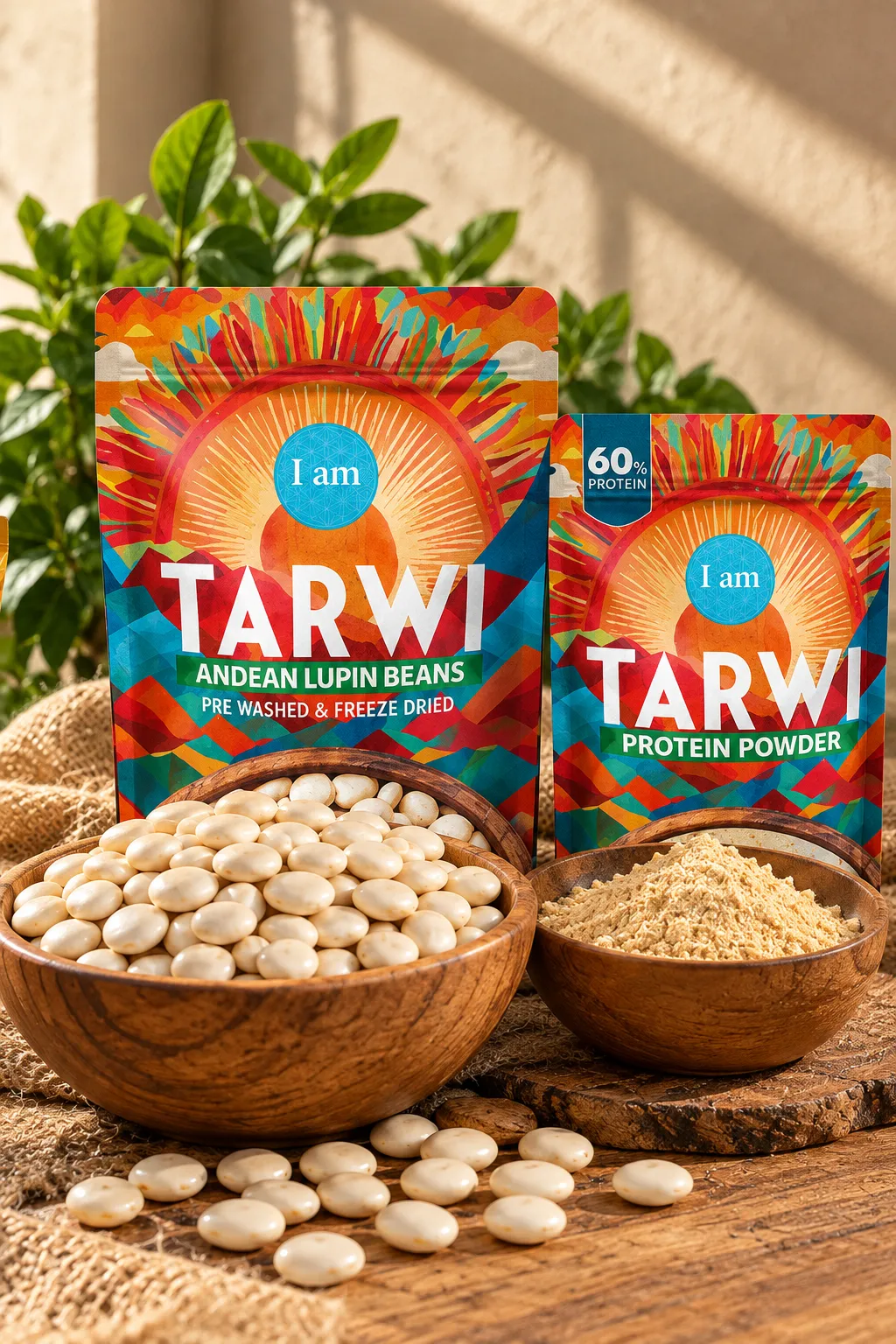
Our product makes tarwi easier than ever to enjoy. It’s freeze-dried and ready to eat straight from the package: light, crunchy, and packed with plant-based protein. Keep it in your bag, desk drawer, or pantry for an easy snack that’s anything but ordinary.
Tarwi traditionally goes through a multi-day debittering process involving soaking, boiling, rinsing, and repeated water changes. Heat by itself isn’t enough because the alkaloids are water-soluble but heat-stable.
So raw, untreated tarwi is not something to toss into a pot like a bag of lentils and hope for the best.
Properly prepared commercial tarwi has already gone through the necessary processing. If you’re buying raw seeds, that’s a different situation, and the full guide to tarwi explains the debittering and safety factors in much more detail.
Do Tarwi and Chickpeas Taste the Same?
No, and swapping one for the other changes more than the nutrition label.
Chickpeas become soft and creamy when cooked. That’s exactly why they’re so good at becoming hummus.
Prepared tarwi has more resistance to it. The bean stays firm, almost crunchy, with a mild, slightly nutty and faintly savory flavor. It also holds its shape well when sitting in liquid.
So while you can use tarwi in some of the places you’d normally reach for chickpeas, don’t expect an identical result.
In a salad or grain bowl, that firmer bite can work particularly well.
If you’re making a hummus-style dip, tarwi’s higher fat content and different texture will give you something a little richer and less traditionally chickpea-like. I’ve made hummus with tarwi myself, and while it’s a bit firmer than the classic version, I honestly loved it. It’s rich, satisfying, and has a character all its own.
And that’s kind of the point. Tarwi doesn’t need to impersonate a chickpea.
Our product makes tarwi easier than ever to enjoy. It’s freeze-dried and ready to eat straight from the package: light, crunchy, and packed with plant-based protein. Keep it in your bag, desk drawer, or pantry for an easy snack that’s anything but ordinary.
Chickpeas Have Convenience on Their Side
Chickpeas have one enormous advantage: they’re everywhere.
You can walk into almost any grocery store and find them dried, canned, roasted, turned into hummus, ground into flour, or hiding somewhere in the snack aisle.
Tarwi isn’t there yet.
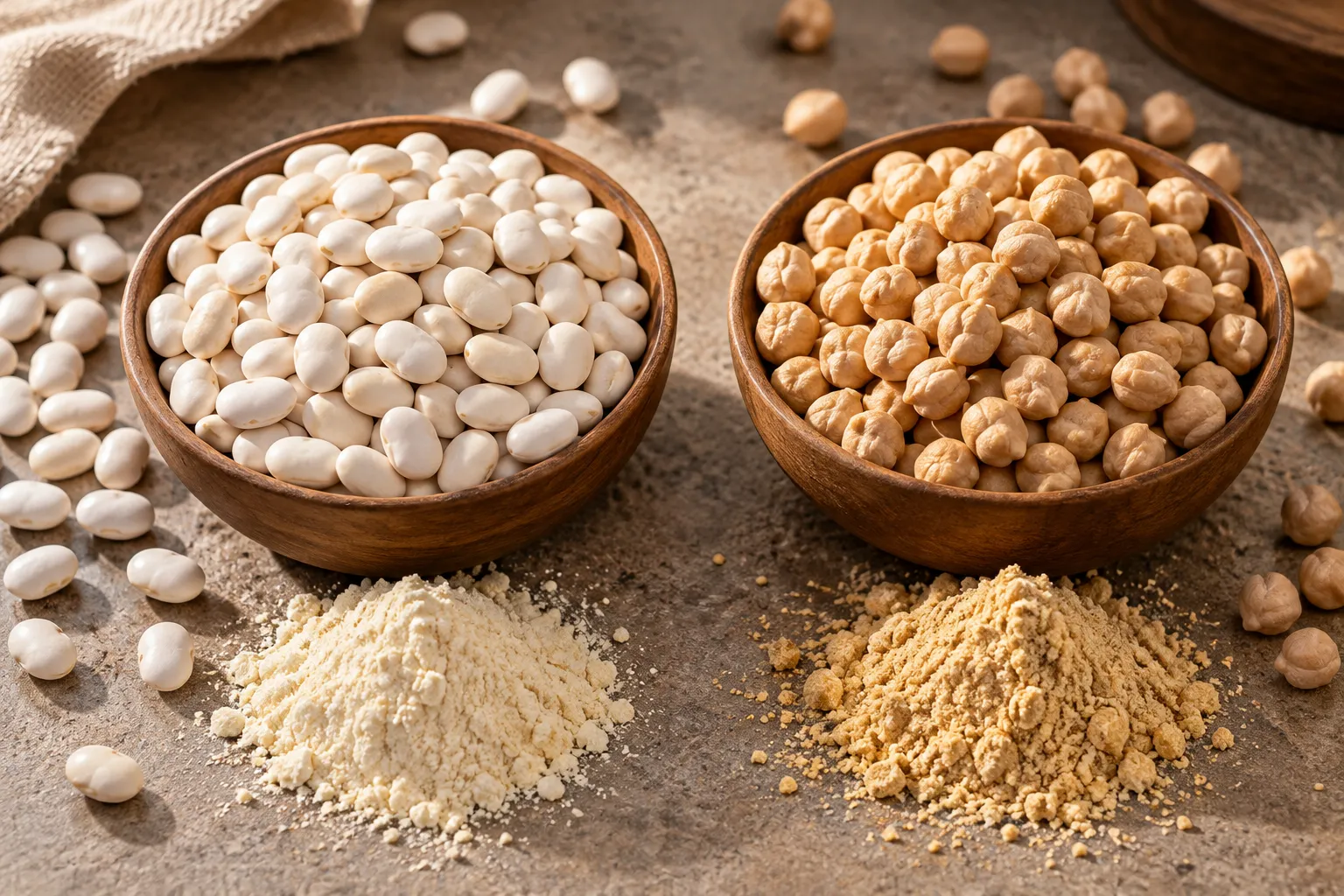
Outside South America, it’s still an ingredient most people are discovering for the first time. That means you may be more likely to encounter it as a prepared product, such as a freeze-dried snack or powder, rather than next to the canned beans.
Chickpeas had a head start. We’re just here to help tarwi catch up. Think of us as tarwi’s hype team, on a mission to get this little Andean bean the shelf space (and fan club) it deserves. One crunchy snack at a time.
And don’t worry, we’re not here to evict chickpeas from your pantry. There’s room for both.
If you want traditional hummus, use the chickpeas.
But if you’re looking for a legume that brings roughly twice the protein of cooked chickpeas while containing very little starch, tarwi starts to look pretty different from the beans you already know.
Tarwi vs. Chickpeas: The Bottom Line
They’re both legumes, but that’s where the easy comparison ends.
Chickpeas are softer, starchier, lower in protein, and deeply familiar to most American kitchens.
Tarwi is firmer, naturally higher in protein and fat, and unusually low in starch. It also comes with an Andean food tradition that existed long before most of us had ever heard the word tarwi.
So this isn’t really about replacing chickpeas.
It’s about realizing that the legume category is a lot bigger than the handful of beans we’ve gotten used to eating.
And tarwi is a pretty interesting place to start.
Want to know more about where it comes from, why it has to be debittered, and what makes its nutrition so different? Read our complete guide to tarwi.
×
Thank you for your interest in Tarwi!
We’ve received your information, and a member of our team will be in touch to learn more about your needs and discuss how Tarwi could work for your business.