There is one thing you should know about tarwi before you know how much protein it has, what it tastes like, or what to do with it in the kitchen:
Let's Talk About the Alkaloids
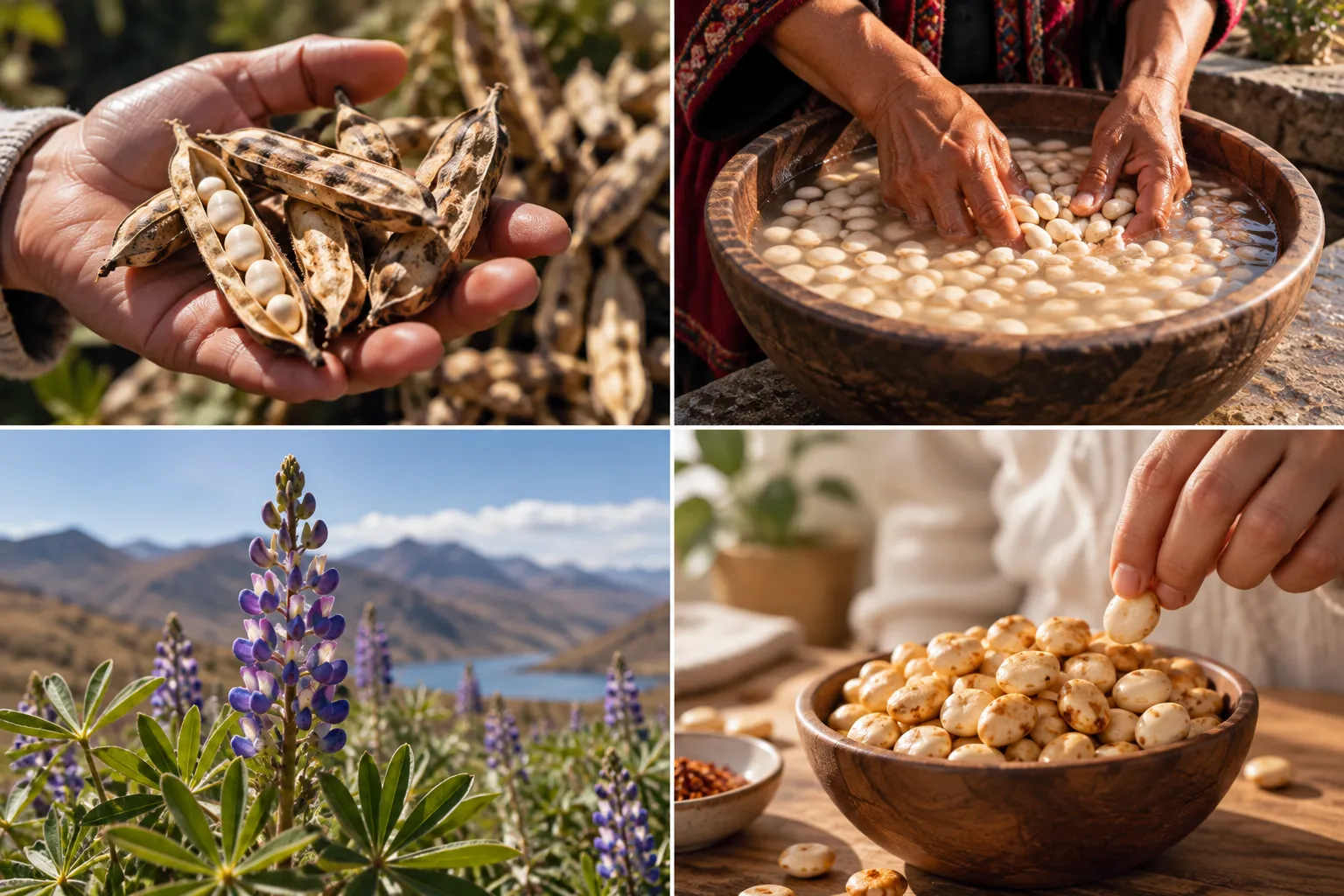
Raw tarwi isn’t meant to be eaten straight from the plant. Tarwi (Lupinus mutabilis) contains natural compounds known as quinoline alkaloids. They’re responsible for the intense bitterness of untreated tarwi, and at high enough concentrations, they can be toxic to humans.
That’s alarming without context. With it, less so.
People in the Andes have eaten tarwi for generations because they developed a process for removing those bitter compounds before eating the bean. It’s called debittering, and it’s an essential part of preparing tarwi.
So the better question isn’t simply, “Is tarwi safe?”
It’s “Has the tarwi been properly processed?”
Why Does Tarwi Contain Alkaloids in the First Place?
Tarwi didn’t develop bitterness to make our lives difficult.
Nature built in its own pest control. The plant produces these alkaloids specifically to keep insects and grazing animals from eating it. The primary alkaloids found in tarwi include lupanine and sparteine. These compounds are also what give untreated tarwi its intense bitterness.
It’s a useful defense mechanism when you’re a plant trying to survive.
Less useful when you’re trying to eat the seed.
That bitter taste is a pretty clear sign that the bean isn’t ready to eat yet. Traditional Andean preparation solves that through repeated soaking and rinsing, using water to draw the alkaloids out of the bean. It’s a process that has been part of preparing tarwi for generations.
That’s why debittering isn’t an optional culinary trick to improve the flavor.
It’s part of making the bean ready to eat.
Why Does Tarwi Contain Alkaloids in the First Place?
Tarwi didn’t develop bitterness to make our lives difficult.
Nature built in its own pest control. The plant produces these alkaloids specifically to keep insects and grazing animals from eating it. The primary alkaloids found in tarwi include lupanine and sparteine. These compounds are also what give untreated tarwi its intense bitterness.
It’s a useful defense mechanism when you’re a plant trying to survive.
Less useful when you’re trying to eat the seed.
That bitter taste is a pretty clear sign that the bean isn’t ready to eat yet. Traditional Andean preparation solves that through repeated soaking and rinsing, using water to draw the alkaloids out of the bean. It’s a process that has been part of preparing tarwi for generations.
That’s why debittering isn’t an optional culinary trick to improve the flavor.
It’s part of making the bean ready to eat.
What Exactly Is Debittering?
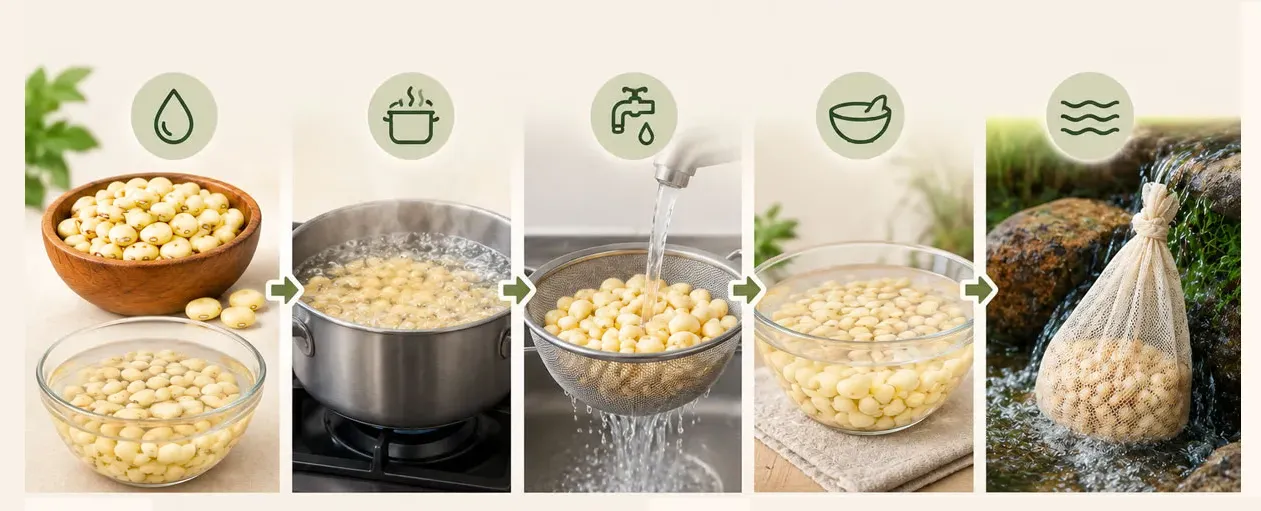
Simply put, the alkaloids need to move out of the bean and into the water.
Quinolizidine alkaloids are water-soluble but heat-stable. That second part is important because it means you can’t simply boil raw tarwi for longer and assume the problem has been solved.
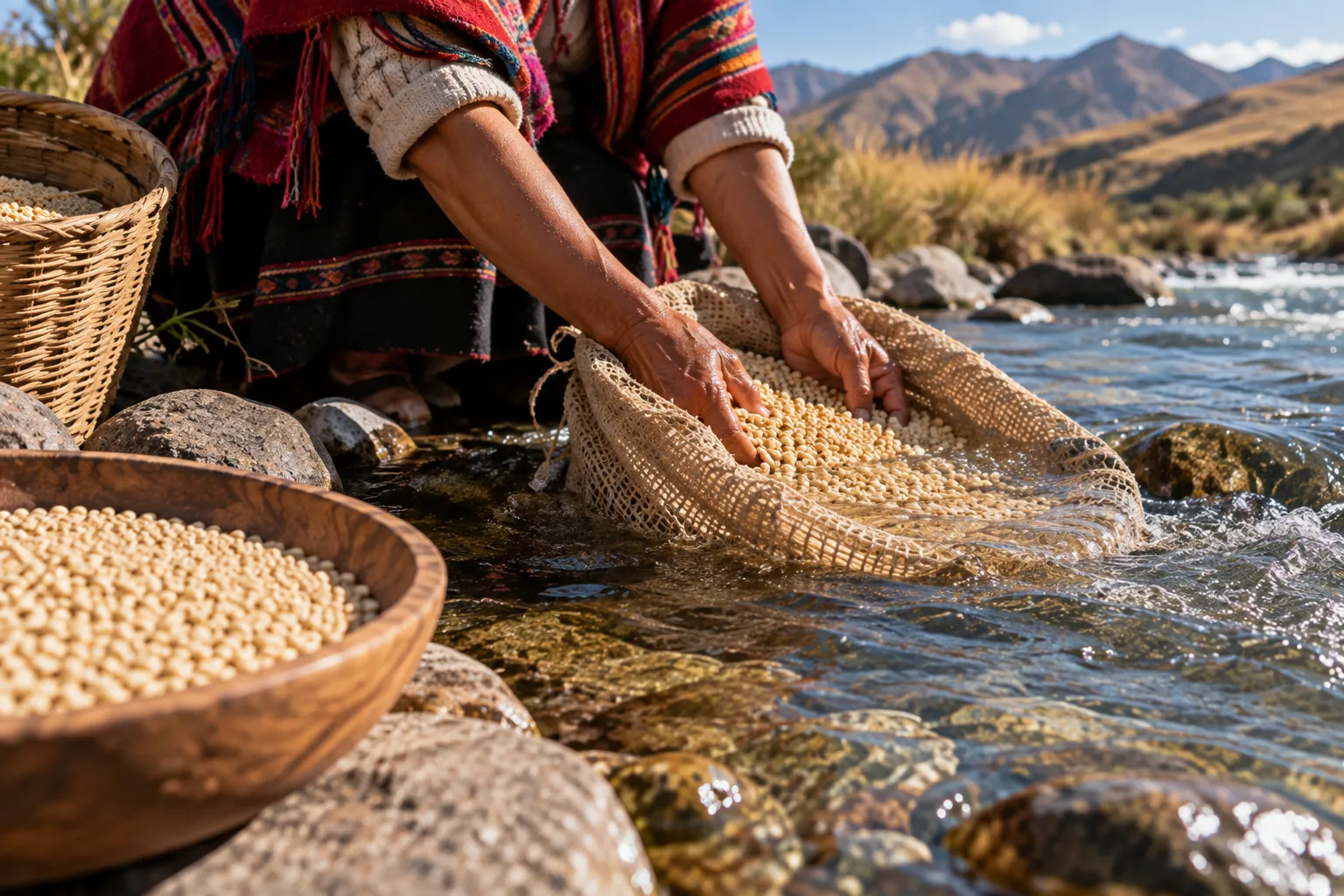
Traditional Andean preparation uses water over an extended period.
The beans are boiled, then rinsed and soaked in fresh water, again and again, until the bitterness is gone. Traditionally, that meant a mesh sack anchored in a running river and letting the current do the work.
Very low-tech. Very clever.
And the research agrees. After proper processing, only trace amounts of the alkaloids remain.
If Tarwi Tastes Bitter, Pay Attention
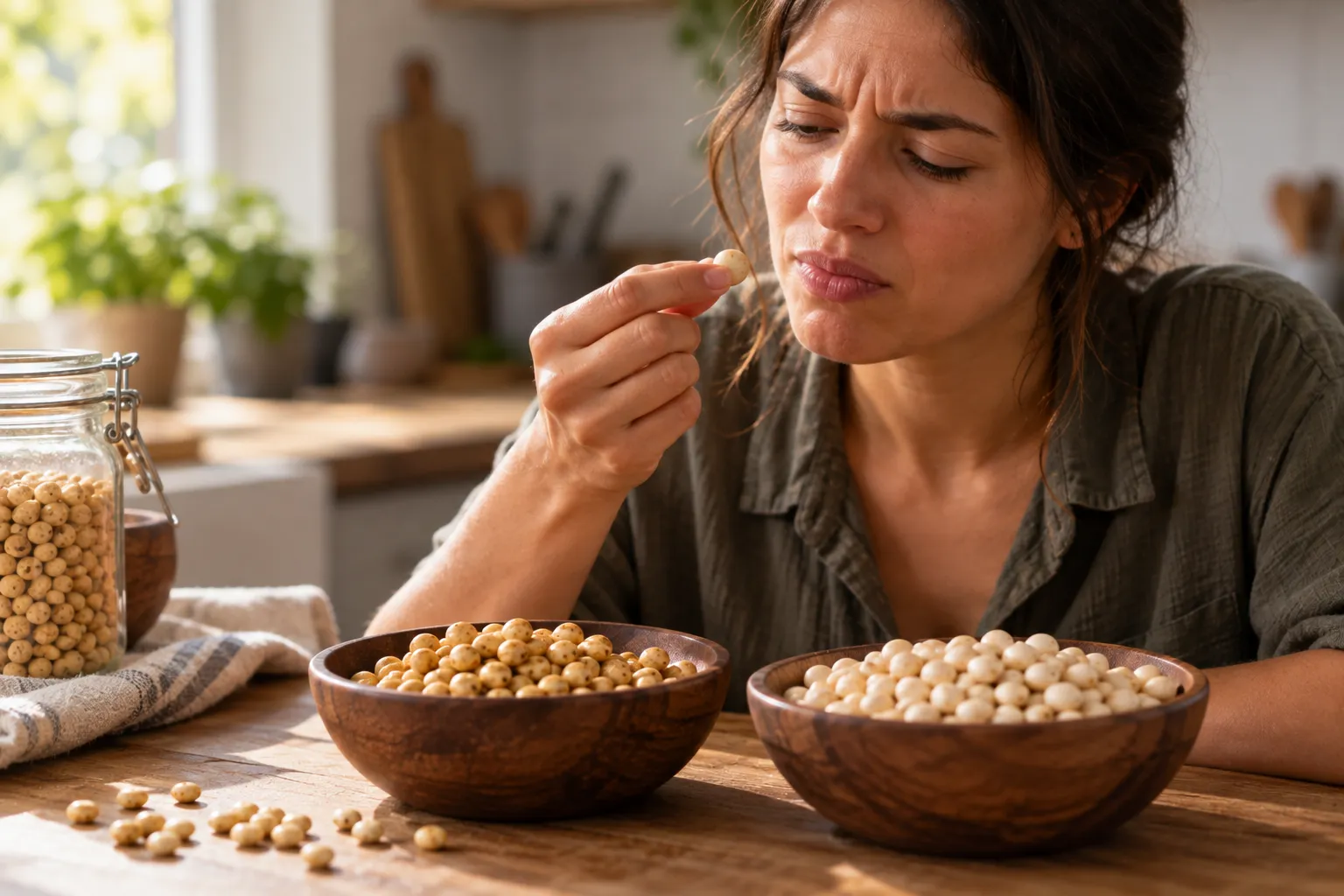
Bitterness is useful information with tarwi.
Traditional preparation has long used taste as one indication that the debittering process is complete. Properly debittered tarwi should not have that intense bitter taste.
But we wouldn’t recommend treating your taste buds as a laboratory.
If you’re buying tarwi commercially, the more useful question is how the producer handles debittering and alkaloid control in the first place.
That matters much more than trying to judge safety after the package reaches your kitchen.
If Tarwi Tastes Bitter, Pay Attention
Bitterness is useful information with tarwi.
Traditional preparation has long used taste as one indication that the debittering process is complete. Properly debittered tarwi should not have that intense bitter taste.
But we wouldn’t recommend treating your taste buds as a laboratory.
If you’re buying tarwi commercially, the more useful question is how the producer handles debittering and alkaloid control in the first place.
That matters much more than trying to judge safety after the package reaches your kitchen.
Is There a Safe Level of Alkaloids in Tarwi?
Yes, and this is where we can get more specific than “the bitterness is gone.”
Food safety guidelines set a limit of 200 mg of alkaloids per kilogram of lupin products. Properly processed tarwi is debittered to bring those naturally occurring compounds down to safe levels before it’s eaten.
That gives producers something measurable to work against rather than relying solely on taste.
The Bigger Difference Might Actually Be
It’s also why, when you’re evaluating a tarwi product, alkaloid testing is a much better question than whether the bean is naturally bitter.
Of course it starts bitter.
What matters is what happened next.
What About our Tarwi?
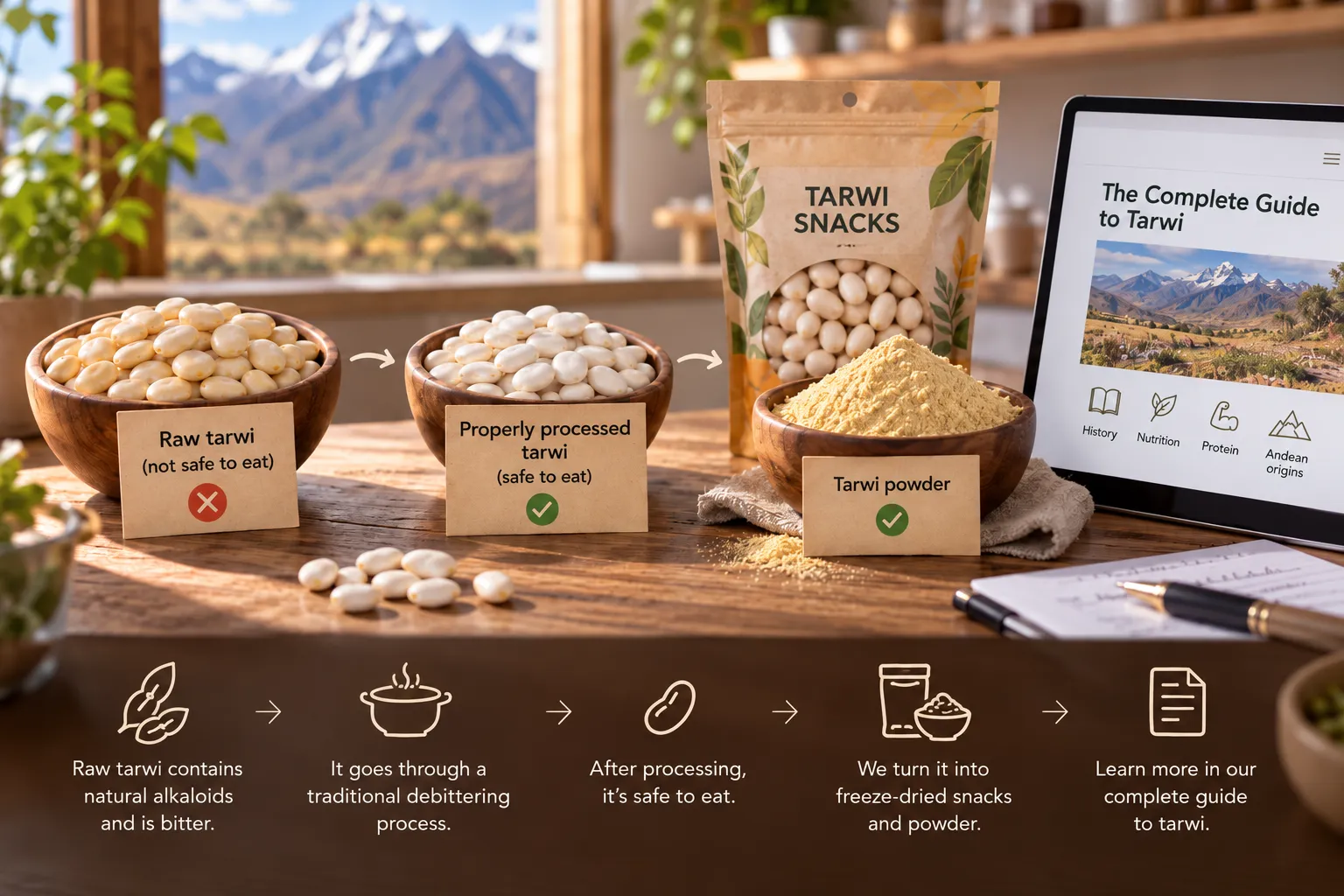
Our tarwi doesn’t go from field to package untouched. The raw bean has to go through the necessary preparation and debittering process before it becomes the tarwi that you eat.
From there, we create two forms.
Our freeze-dried tarwi snacks keep the bean whole and turn it into the crunchy format you can eat directly from the bag.
Our tarwi powder takes the prepared bean in another direction, milling it into a form that can be incorporated into smoothies, baking and other recipes.
In other words, customers aren’t being handed raw bitter tarwi and expected to figure out the multi-day processing themselves.
The debittering happens before the product reaches you.
Is Tarwi Safe for Everyone?
Alkaloids aren’t the only safety consideration worth mentioning.
Tarwi is a lupin, and lupin can cause allergic reactions.
A quick note on allergies. Lupin is a known allergen, much like peanuts. If you’re allergic to peanuts, treat tarwi with extra caution. It’s also possible to have a lupin allergy even if you’ve never reacted to peanuts or soy.
Labeling rules also vary by country. In the EU, lupin must be listed on food packaging as a known allergen. In the US, the FDA doesn’t currently require it.
If you have a peanut allergy and want to try tarwi, it’s a good idea to check with an allergist first.
So, Is Tarwi Safe to Eat?
Properly processed tarwi is meant to be eaten. Raw, untreated tarwi is not.
That distinction is the whole story.
The alkaloids aren’t some newly discovered problem hiding inside tarwi. They’re a known characteristic of lupins and the reason debittering has been part of traditional tarwi preparation for generations.
It’s also why we think the processing side of tarwi deserves to be talked about rather than hidden behind the finished product.
By the time our tarwi becomes a freeze-dried snack or powder, the bitter raw bean has already gone through the preparation necessary before it reaches the customer.
Tarwi may be unfamiliar to a lot of people outside South America. The process behind eating it isn’t new at all.
For a deeper look at the bean itself, including its history, nutrition, protein content and Andean origins, read our complete guide to tarwi.
×
Thank you for your interest in Tarwi!
We’ve received your information, and a member of our team will be in touch to learn more about your needs and discuss how Tarwi could work for your business.