How Is Tarwi Prepared? From Bitter Bean to Crunchy Snack
If you bought a bag of raw tarwi straight from the harvest, you wouldn’t want to start snacking on it.
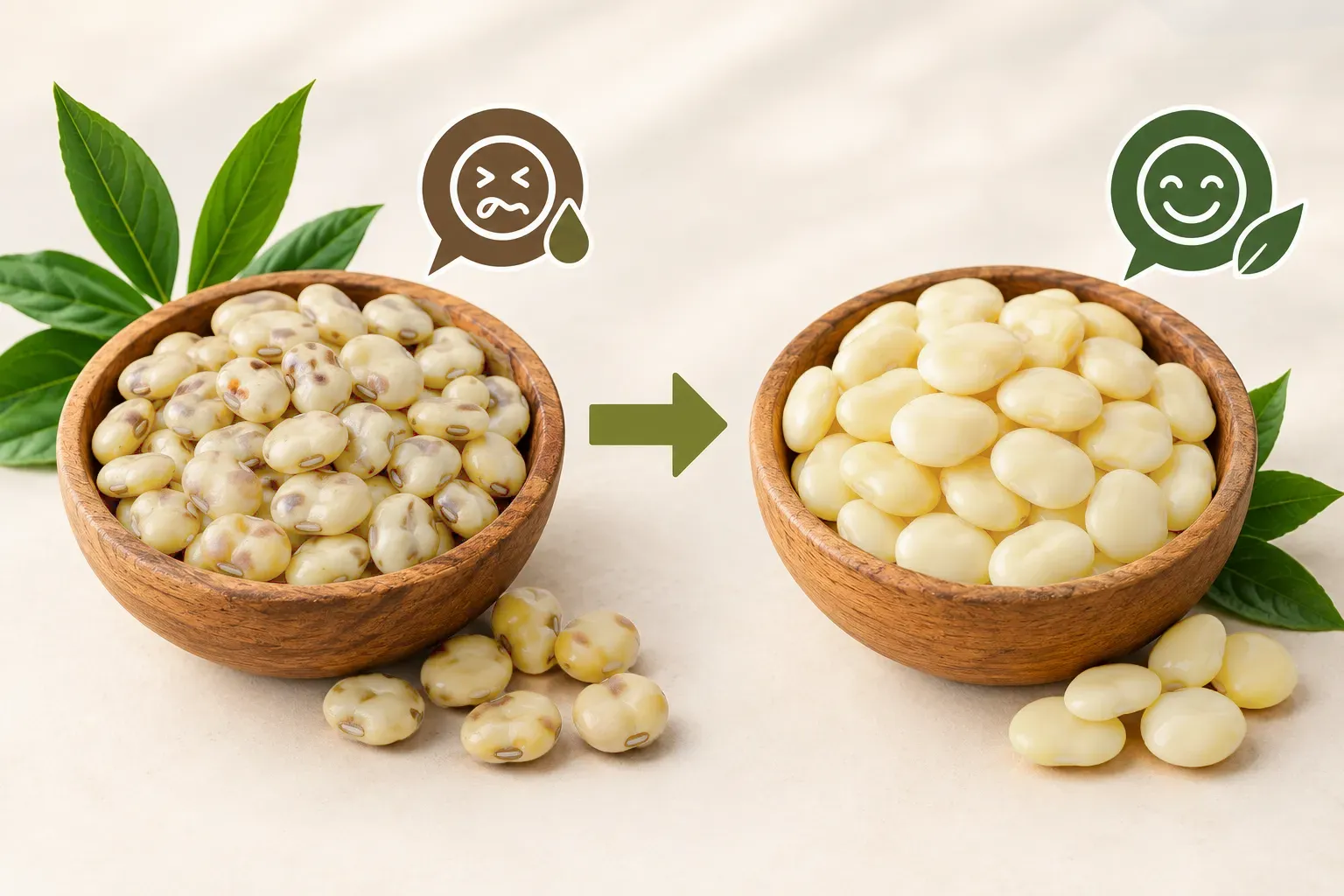
Freshly harvested tarwi (Chocho) naturally contains compounds called quinolizidine alkaloids, primarily lupanine and sparteine. They’re part of the plant’s natural defense system, and they’re also responsible for the bean’s famously intense bitterness. Before tarwi can be eaten, those alkaloids need to be removed through a process known as debittering.
Traditionally, that meant days of soaking and rinsing.
Our tarwi goes through that process before it ever gets anywhere near your pantry.
Why Tarwi Has to Be Debittered
The bitterness in raw tarwi isn’t comparable to that of a slightly bitter vegetable you can fix with salt or a longer roast.
Quinolizidine alkaloids can be unsafe at sufficiently high concentrations, so properly processing tarwi isn’t just about making it taste better. It’s an essential part of preparing the bean for food.
There’s another interesting wrinkle: you can’t simply cook the bitterness away.
The alkaloids are water-soluble but heat stable. In other words, heat alone doesn’t remove them. Water does heavy lifting.
Andean communities figured this out long before anyone was talking about alkaloid concentrations in a lab.
Why Tarwi Has to Be Debittered
The bitterness in raw tarwi isn’t comparable to that of a slightly bitter vegetable you can fix with salt or a longer roast.
Quinolizidine alkaloids can be unsafe at sufficiently high concentrations, so properly processing tarwi isn’t just about making it taste better. It’s an essential part of preparing the bean for food.
There’s another interesting wrinkle: you can’t simply cook the bitterness away.
The alkaloids are water-soluble but heat stable. In other words, heat alone doesn’t remove them. Water does heavy lifting.
Andean communities figured this out long before anyone was talking about alkaloid concentrations in a lab.
The Traditional Way to Prepare Tarwi
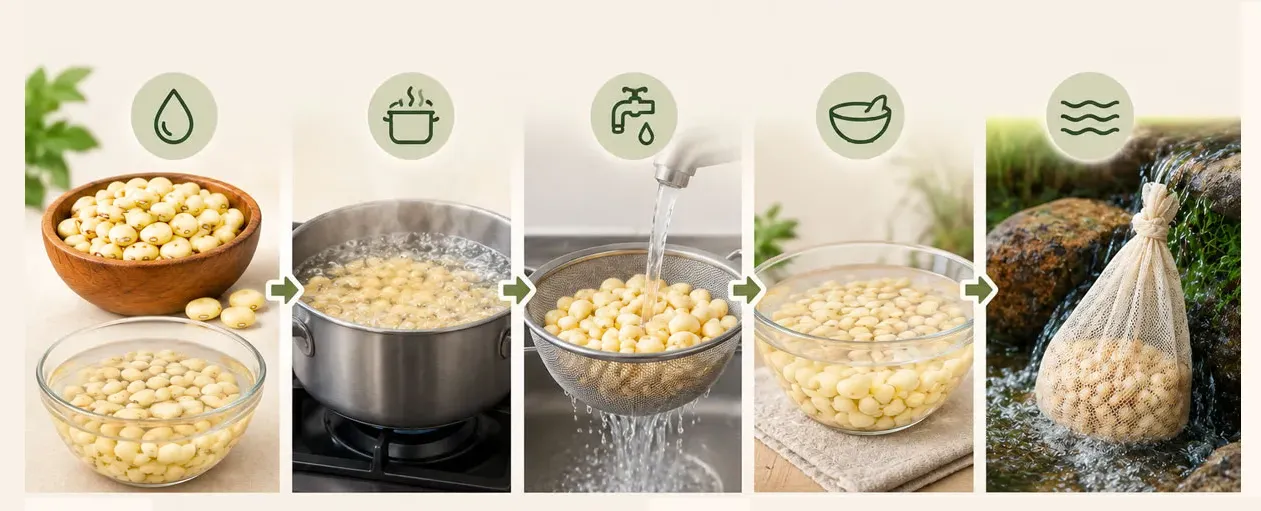
Traditional tarwi preparation is essentially a long water-extraction process.
Raw beans are soaked to hydrate them, boiled to soften the seed tissue, and then repeatedly rinsed and soaked in fresh water. Historically, tarwi could even be placed in a mesh sack in running water, allowing a stream to continuously carry the bitterness away.
The process generally takes several days.
It’s wonderfully simple when you think about it: bean, water, time.
It’s also not particularly practical when you want a snack at 3 p.m.
What Happens to Our Tarwi Before You Eat It
The Tarwi Is Harvested
Tarwi begins as a raw Andean legume. At this stage, it still contains its naturally occurring alkaloids and has the characteristic bitterness that makes untreated tarwi unsuitable for eating.
The Beans Are Debittered
This is the step that transforms raw tarwi into something we can actually eat.
Rather than asking the customer to soak and rinse beans for days at home, the tarwi is debittered during processing using a controlled water-based process based on the same principle Andean communities have traditionally used.
Water draws the naturally occurring alkaloids out of the bean until the bitterness is removed.
The Prepared Beans Are Freeze-Dried
Once the tarwi has been properly prepared, we freeze-dry it.
Freeze-drying removes moisture from the prepared beans without turning them into the soft, canned-bean texture you might expect from a typical legume. This also locks in all the nutrients that make our Tarwi a powerhouse.
What you’re left with is something completely different: a light, crunchy tarwi bean that can be eaten straight from the bag.
No soaking. No boiling. No three-day project happening next to your sink.
From There, Tarwi Takes Two Different Paths
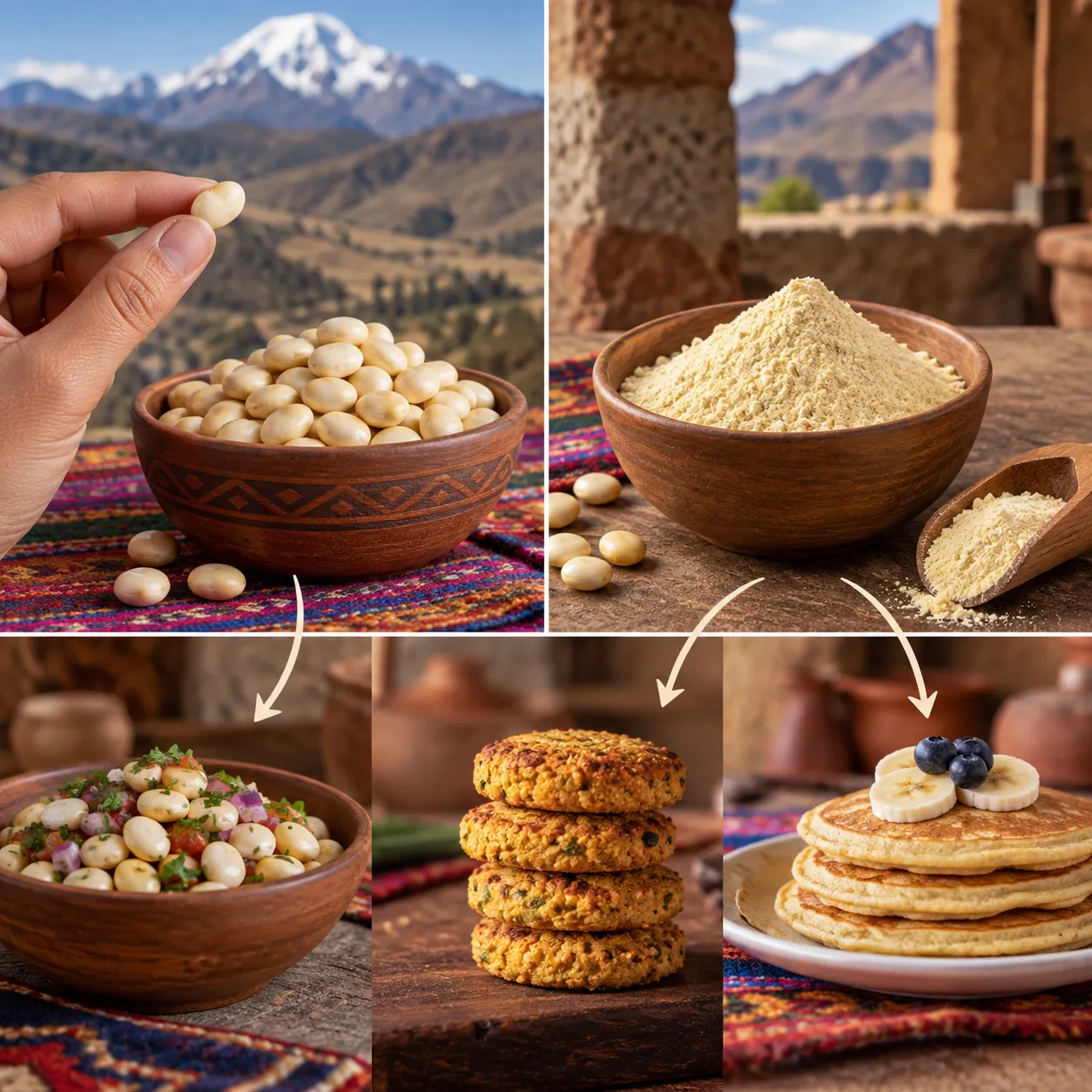
For our tarwi snacks, the freeze-dried beans stay whole. They’re seasoned and packaged so the bean itself is the snack.
For our tarwi powder, the prepared tarwi is finely ground and can be added to smoothies, baking, pancakes, breads, and other recipes.
Same bean. Same important preparation before it reaches you. Two very different ways to use it.
Do You Need to Cook Our Tarwi?
If you’re buying our freeze-dried tarwi snacks or tarwi powder, the debittering and preparation have already happened before the product reaches you.
The whole freeze-dried beans can be eaten directly from the package.
The powder can be incorporated directly into recipes. Depending on what you’re making, the recipe itself may involve cooking or baking, but you’re not cooking the powder to make the tarwi safe to eat.
What If You Buy Raw Tarwi Somewhere Else?
Starting with raw tarwi? Raw, untreated tarwi requires proper debittering before it can be eaten. Traditional preparation involves soaking, boiling, and repeated rinsing or soaking in fresh water over several days. Boiling alone does not remove the alkaloids. If you’re working with raw tarwi rather than a commercially prepared product, follow a validated debittering protocol rather than treating it like an ordinary dried bean.
What If You Buy Raw Tarwi Somewhere Else?
Starting with raw tarwi? Raw, untreated tarwi requires proper debittering before it can be eaten. Traditional preparation involves soaking, boiling, and repeated rinsing or soaking in fresh water over several days. Boiling alone does not remove the alkaloids. If you’re working with raw tarwi rather than a commercially prepared product, follow a validated debittering protocol rather than treating it like an ordinary dried bean.
So, How Do You Actually Eat Tarwi?
Once somebody else has handled the several-days-of-water part (which is what we do!), tarwi becomes much less complicated.
Our freeze-dried version is meant to be eaten straight from the bag. It keeps the bean’s firm character but turns it into a dry crunch, which puts it closer to the snack cabinet than the canned-bean aisle.
Tarwi powder goes in the other direction. Grinding the prepared beans gives you a way to bring tarwi into foods where you don’t necessarily want whole beans: smoothies, pancakes, breads, baked goods, and other recipes.
And that’s really the difference between how tarwi has to be prepared and how you have to prepare our tarwi.
The first took generations of Andean knowledge and a carefully controlled process to figure out.
The second can be as complicated as opening the bag.
×
Thank you for your interest in Tarwi!
We’ve received your information, and a member of our team will be in touch to learn more about your needs and discuss how Tarwi could work for your business.